
When news breaks about a foodborne illness outbreak, one of the first questions consumers ask is also one of the most difficult to answer: Where did this food come from?
For produce purchased through a large, complex supply chain, the answer may involve growers, harvesting crews, packing facilities, processors, distributors, warehouses, transportation companies, retailers and restaurants—sometimes operating across several states or countries.
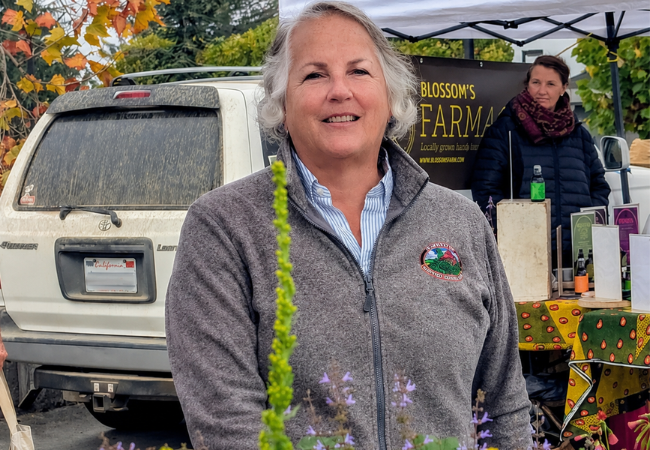
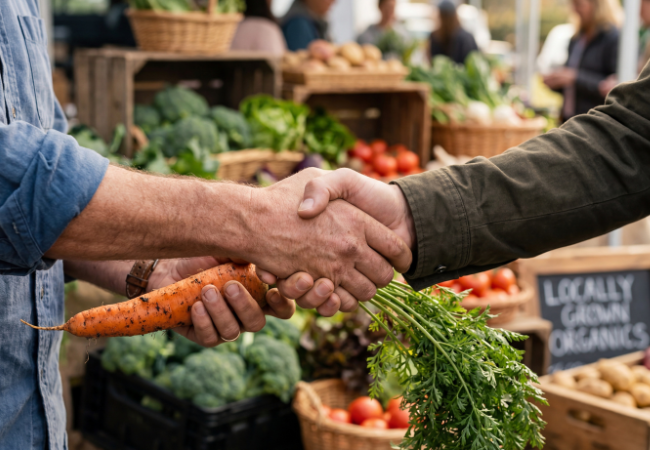
At a certified farmers market, the answer is often standing directly behind the table.
The person who grew the lettuce, harvested the strawberries, gathered the eggs or raised the meat is there to talk with you. You can ask where the food was grown, when it was harvested, how it was handled and what practices are used on the farm.
That direct connection is the heart of “know your farmer.” It is also one of the most meaningful benefits of shopping locally.
A Food-Safety Crisis—and a Crisis of Confidence
The importance of transparency has come sharply into focus during the widespread 2026 increase in cyclosporiasis, an intestinal illness caused by the microscopic parasite Cyclospora.
As of July 27, the Centers for Disease Control and Prevention had received reports of 6,707 laboratory-confirmed domestically acquired cases across 45 states. The agency was also aware of more than 11,500 additional cases requiring confirmation or further investigation. Those national numbers include several clusters and outbreaks, not all of which have been traced to the same source.
One multistate outbreak was linked through epidemiological and traceback evidence to iceberg lettuce sourced from central Mexico and supplied by Taylor Farms de Mexico. The company recalled the implicated iceberg lettuce on July 17. By the CDC’s July 24 investigation update, 1,947 confirmed cases in nine states had been associated with that specific outbreak.
Public concern quickly spread beyond the recalled products. Consumers began questioning lettuce, berries and other fresh produce, even when those foods came from unrelated farms and regions.
That loss of confidence has consequences.
California lettuce growers whose crops were not connected to the outbreak have reportedly faced falling demand and have left healthy lettuce unharvested or plowed it back into the soil. At the same time, farmers markets in other parts of the country have experienced increased customer traffic as shoppers search for produce with a more identifiable origin.
The lesson is not simply about lettuce. It is about the value of knowing where our food comes from before a crisis occurs.
Fewer Steps Between the Farm and Your Table
Most fresh produce at a farmers market travels through a relatively short supply chain: Farm. Market. Kitchen.
The farmer generally knows where the crop was grown, who harvested it, how it was washed or packed, how it was transported and how long it has been since harvest.
By comparison, produce moving through a national or international system may be combined, processed or repacked with products from numerous farms. It can pass through several facilities before reaching the consumer.
Large food systems feed millions of people and are governed by important food-safety standards. However, their size and complexity can make traceback more difficult when something goes wrong. Investigators may need to examine restaurant records, shipping documents, distributors, processing facilities and multiple farms to identify the original source.
A shorter supply chain does not eliminate every possibility of contamination. Food can be mishandled at farms of any size, and all growers must take food safety seriously.
What a shorter supply chain can provide is greater visibility and accountability. There are fewer links to trace, fewer transfers between businesses and fewer opportunities for the identity of the original farm to become obscured.
At the Farmers Market, You Can Ask
Food labels can tell us a great deal, but they cannot replace a conversation.
When you purchase directly from a farmer, you may be able to ask:
- Where was this grown?
- When was it harvested?
- Is the produce washed, or should it be washed at home?
- What kind of water is used for irrigation and post-harvest handling?
- How is the produce cooled and stored?
- What pest-management or soil-building practices do you use?
- Are the eggs, meat or dairy products produced on your farm?
- What is the best way to store and prepare this food?
Farmers who sell directly to the public understand that customer trust is part of their business. They return to the same market week after week, often for many years. Their customers know their names, recognize their families and follow the changing seasons through the food on their tables.
That relationship creates a powerful form of accountability.
When a customer has a question, there is someone to ask. When a farmer has important information to share, there is a direct path to the customer.
Certified Farmers Markets Protect the Farmer-to-Consumer Connection
A certified farmers market is more than an outdoor collection of produce stands.
In California, the certified market system is designed to preserve direct sales between agricultural producers and consumers. Farmers selling in a certified producer section must be certified to sell agricultural products they have produced themselves.
That distinction matters.
It means shoppers are not simply buying food displayed beneath a tent. They are participating in a regulated system intended to connect them with the people who grew or produced it.
At Monterey Bay Certified Farmers Markets, many farmers have served local families for decades. Customers have watched their children grow up, followed farms through difficult seasons and learned to anticipate the arrival of favorite crops.
These relationships cannot be duplicated by a barcode or a supermarket shelf tag.
Local Does Not Mean Careless—or Automatically Risk-Free
Supporting local agriculture should never require overstating its benefits.
Produce from a farmers market is not inherently immune to foodborne pathogens. Safe food depends on responsible practices at every stage, including soil and water management, worker hygiene, harvesting, washing, cooling, transportation, market display and handling at home.
Consumers should continue to wash fresh produce as appropriate, refrigerate perishable foods promptly, prevent cross-contamination and follow official recall instructions.
During an active recall, “local” should not be used as a substitute for verifying whether a particular product is affected. Shoppers should follow information from the FDA, CDC and local public-health agencies.
The advantage of buying directly from a local farmer is not a guarantee that nothing can ever go wrong. It is that the food’s origin is usually clearer, the route to market is shorter and the person responsible for producing it is accessible.
That is a meaningful advantage.
Freshness You Can See—and Taste
There are other benefits to a shorter journey from farm to table.
Produce sold at a farmers market is often harvested shortly before market day. Farmers can select varieties for flavor, regional suitability and quality rather than primarily for their ability to withstand long-distance shipping and extended storage.
The result may be lettuce that is crisp and freshly cut, berries harvested at ripeness, tomatoes chosen for flavor and herbs that still carry the fragrance of the field.
Freshness is not only a culinary pleasure. It is part of understanding food as something grown by people, in soil, according to seasons—not simply as a standardized product that appears year-round on a shelf.
Your Purchase Strengthens the Local Food System
Every farmers market purchase is also an investment in regional resilience.
Money spent with a local farmer helps support farmland, agricultural jobs and family businesses. It gives small and midsized farms a direct marketplace for crops that might not fit the requirements of large wholesale systems.
A strong network of local farms also gives a community more food sources. When national distribution systems are interrupted by recalls, transportation problems, severe weather or other disruptions, regional producers can provide an important layer of diversity and resilience.
Local farms cannot replace the entire national food system. Nor should the two be framed as simple opponents. Communities need many forms of agriculture and distribution.
But a healthy local food economy gives consumers more choices and keeps agricultural knowledge, productive land and food dollars within the region.
Trust Is Grown Over Time
The current outbreak will eventually pass. The headlines will change, recalled products will disappear from shelves and consumer buying patterns may gradually return to normal.
But the larger question will remain: How well do we know the system that feeds us?
Knowing your farmer does not mean knowing every detail of agricultural production. It begins with something much simpler: recognizing that there is a person and a place behind the food you eat.
It means asking questions. Learning what grows in your region. Understanding the seasons. Returning to the same farm stand. Introducing your children to the people who produce their food. Choosing, whenever possible, a food system built not only on transactions, but also on relationships.
At the farmers market, transparency is not a slogan. It is a conversation across the table.
And in moments when confidence in the broader food supply has been shaken, that conversation becomes more valuable than ever.
Shop Local. Ask Questions. Know Your Farmer.
Visit Monterey Bay Certified Farmers Markets and meet the farmers, ranchers and food producers who nourish our community.
Learn their names. Ask how your food was grown. Discover what is in season—and take home food with a story, a place and a person behind it.
Because knowing your farmer is not simply a pleasant part of shopping at the market.
It is one of the foundations of a more transparent, accountable and resilient food system.